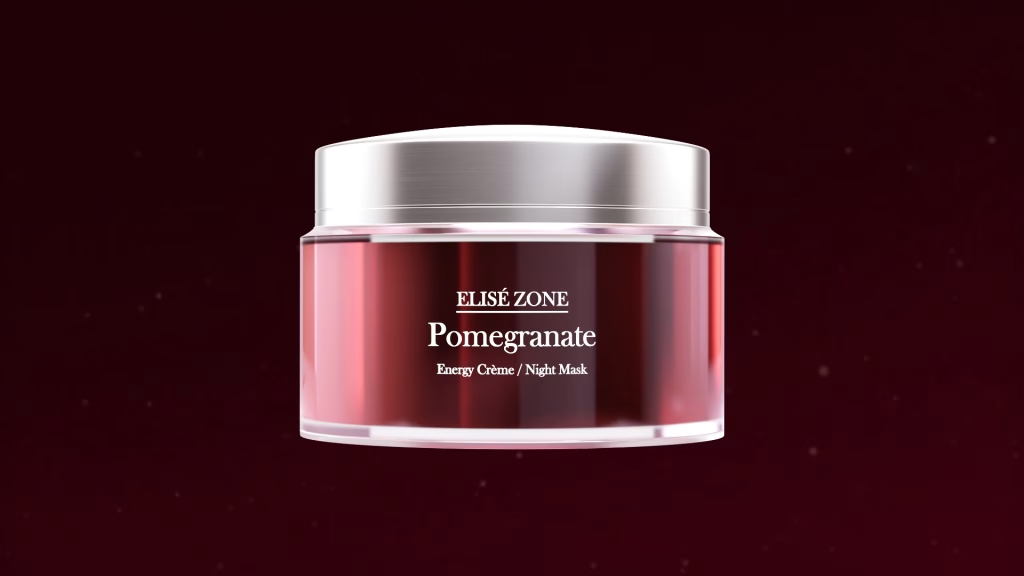

Here’s the thing about ingredients. They can feel boring or they can be everything. If you’re creating supplements or skincare products, your ingredients are literally what make your product work. But how do you make someone care about probiotics or peptides when they can’t see them doing anything?
That’s where 3D animation comes in. It’s not just fancy graphics. It’s the difference between saying a serum contains hyaluronic acid and actually showing how those molecules pull in moisture and plump the skin from the inside.
Why Photos and Diagrams Don’t Cut It
Product photography is great for showing packaging, but it can’t reveal what’s happening beneath the surface. A white powder looks the same whether it’s a groundbreaking collagen peptide or a basic filler.
Clinical diagrams belong in research papers, not on your website. Your customers aren’t scientists—they want to understand why a cream is worth it or why a supplement is different from the others they’ve seen online.
Animation solves this by creating a visual story. You can show vitamin C molecules diving through skin layers, neutralizing free radicals, and triggering collagen production. Suddenly, your ingredient list becomes a story of transformation.
How Animation Actually Works for Your Brain
Humans process visuals far faster than text. When you animate an ingredient’s journey, like a probiotic traveling through the digestive system, people understand and remember it faster. Movement grabs attention in ways nothing else can. Watching molecules interact with cells engages the brain as if it’s happening in real life.
3D representation also helps people understand space and scale. They can see exactly how an ingredient penetrates, spreads, or interacts with other elements in the body.
Telling Your Ingredient’s Story
Every ingredient has a story worth sharing. Did a botanical extract come from high-altitude gardens where harsh conditions make plants stronger? Show it. Take viewers from the mountains to the plant itself, then into the lab.
A strong ingredient animation often includes:
- The journey approach: zoom through the skin or body to show what happens at the cellular level
- Color coding: different colors for active and supporting ingredients so viewers can follow along
- The transformation: compress weeks of results into seconds to make the invisible visible
Different Ingredients Need Different Styles
Botanical ingredients work best with organic, flowing animations. Lab-created ingredients look better with precise, geometric visuals. Biotech ingredients like peptides or stem cells combine organic inspiration and high-tech representation.
Where to Use These Animations
Use short animations on product pages, slightly longer ones on landing pages, vertical formats for social media, and GIFs in emails. Always include captions since most people scroll without sound.
Make Sure It’s Accurate
Your animations need to reflect real science. Work with formulators to ensure accuracy. Include clinical data visually and add regulatory disclaimers in a way that doesn’t disrupt the story.
Different Approaches That Work
Luxury brands can show ingredients transforming with ethereal glows. Science-focused brands may prefer minimal, clinical animations. Lifestyle brands can make ingredients playful and approachable. Match your style to your audience.
Does It Actually Work?
Measure engagement, video completion, and time on page. Even small lifts in conversion can have a real impact. The most successful brands show what ingredients do instead of just listing them.
Start Somewhere
Start with one hero ingredient or signature product. Use it across your website, social media, and email campaigns. Over time, build a consistent visual language that makes your brand instantly recognizable. Your ingredients are powerful—make sure people can actually see that power.